Growth is rarely linear. For many organizations, it also brings complexity – especially when that growth is driven by acquisitions. This was also the case for Vento.
Over the years, a fragmented application landscape emerged, with multiple independent systems supporting different business processes. What once grew organically and logically eventually became a barrier to further scaling.
Vento’s ambition was clear: to continue growing, both nationally and internationally. But that can only be achieved with a solid digital foundation.
Benny Schiettecatte, CIO of Vento: “We were dealing with a landscape that had grown historically, but it increasingly prevented us from acting quickly and consistently. If you want to keep growing, you need a digital backbone that can keep up with that pace.”
The need for a single foundation
To realize that ambition, one key question needed to be answered: how do you create speed and scale in a fragmented environment? The answer lay in standardization.
A future-proof, standardized ERP platform quickly became the key – not only to streamline processes, but also to enable faster integration of future acquisitions and to respond more effectively to market changes.
From the very first exploratory discussions between Vento and Expertum, there was a clear alignment. The choice for SAP Cloud ERP was obvious – and notably, from day one they were aligned across all three domains: ERP, HR, and Sales.
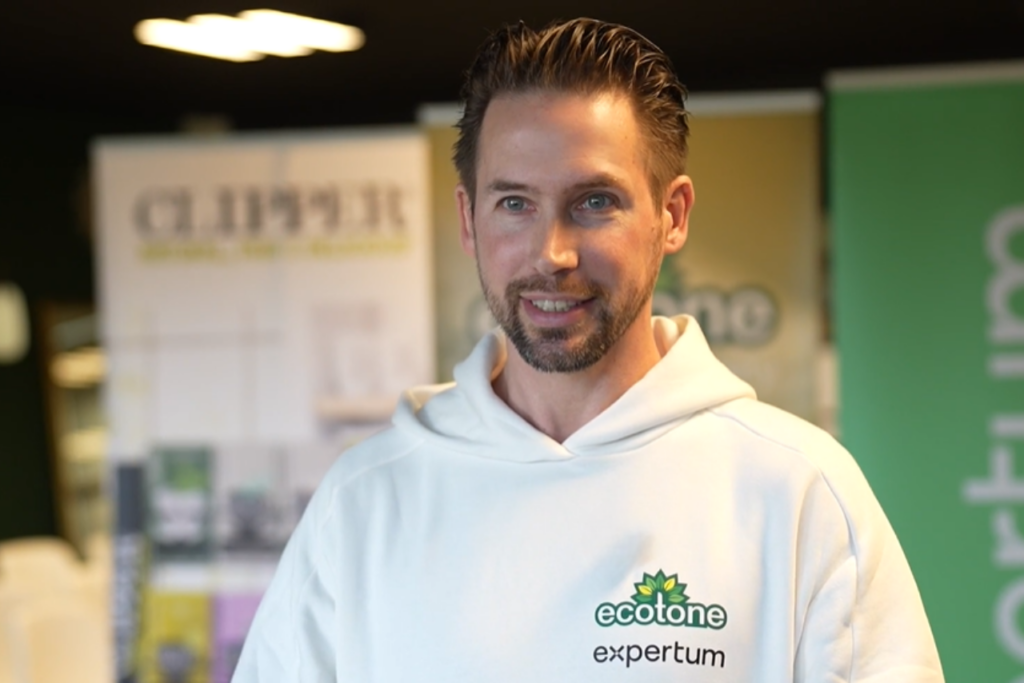
As Samuel Maeseele, Account Manager & Business Development at Expertum, explains: “We went through this transformation ourselves internally and experienced firsthand what standardization and a cloud foundation mean in practice. It forces you to make choices, but at the same time creates the stability and scalability needed to truly move forward. We bring that experience into projects like the one with Vento.”
The reality behind the transformation
However, the path to that new foundation was anything but simple. The biggest challenge was not so much the technology, but the processes. Although Vento’s activities are similar, the differences in go-to-market approaches turned out to be greater than expected. This made harmonization more complex than anticipated. And because there were no uniform structures to build upon, it sometimes felt as if everything had to be built from scratch.
Starting “from a blank sheet” meant there were few existing structures to rely on. Mapping the current (AS IS) processes and defining the future (TO BE) processes – aligned with strategic objectives – proved to be an intensive and time-consuming journey.
Key users and consultants worked closely together – not to select systems, but to design the future. Step by step, a clear future landscape took shape. Without a large IT department, but with the right mindset and preparation, Vento successfully positioned itself for this transformation in a sustainable way.
Strategy as the driving force
For Vento, operational excellence is central. However, with a fragmented landscape, the necessary data and insights at group level were lacking to truly steer that strategy. Making decisions, forecasting, and meeting customer expectations became increasingly difficult.
With an integrated SAP Cloud ERP platform, this changes fundamentally. It not only creates transparency and control, but also enables faster and more effective responses to customer needs – from product offerings to delivery capabilities.
Today, Vento looks ahead with healthy ambition and a sustainable approach. The foundations have been laid, forming the basis for continued growth.

Samuel is here to listen.
Get in touch with him.
Samuel is based in Belgium.